

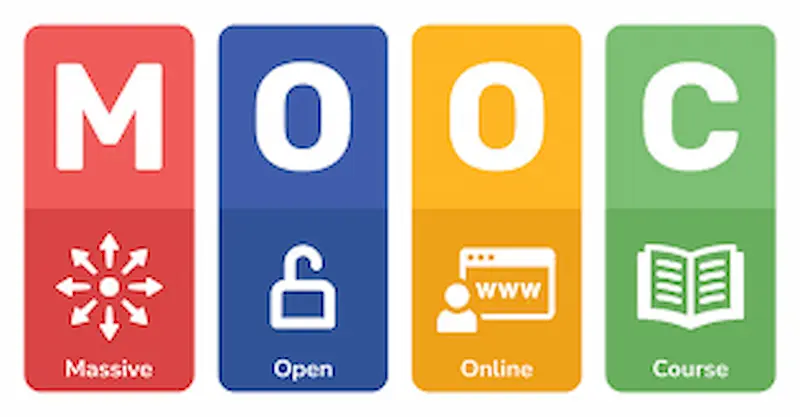
MOOCs (Massive Open Online Courses)In today’s digital world, learning is no longer confined to traditional classrooms or expensive college degrees. Thanks to technology, education has become more accessible, flexible, and affordable than ever before. One of the biggest innovations in this space is MOOCs (Massive Open Online Courses), which allow millions of people to learn new skills, explore different fields, and even earn certifications from the comfort of their homes.
MOOCs bring together world-class universities, industry experts, and learners from across the globe in one online platform. Whether you want to improve your career prospects, gain practical skills, or simply explore a subject you’re passionate about, MOOCs make it possible. With flexible schedules, low or no cost, and a wide variety of courses, they are transforming the future of education and giving everyone the chance to learn without barriers.
What Are MOOCs?
- MOOCs (Massive Open Online Courses) are a modern way of learning that takes place entirely online and is open to anyone, anywhere. Unlike traditional classrooms that are limited by space, time, and cost, MOOCs are designed to reach thousands—even millions—of learners at the same time. All you need is an internet connection, and you can access lectures, assignments, and learning materials from top universities and experts around the world.
- These courses cover a wide variety of subjects, including technology, business, science, health, arts, and personal development. Some MOOCs are designed for beginners who want to explore new topics, while others are more advanced and help professionals improve their skills or prepare for new career opportunities.
- Most MOOCs are structured with video lectures, reading materials, quizzes, peer discussions, and projects, making them interactive and practical. Learners can study at their own pace, revisit lessons anytime, and even connect with a global community of students who share similar interests.
- The main goal of MOOCs is to make high-quality education accessible and affordable to everyone, regardless of where they live or their financial background. In this way, MOOCs are breaking down barriers and creating new opportunities for learning in the digital age.
Key Features of MOOCs

MOOCs have grown rapidly in popularity because they combine technology with education in ways that make learning more inclusive and effective. Below are the key features that set MOOCs (Massive Open Online Courses) apart from traditional education:
Accessibility Without Barriers
- MOOCs are available to anyone with an internet connection, removing limitations like location, age, or financial background.
- A learner in a small town can access the same high-quality course as someone in a big city or even another country.
Flexibility and Self-Paced Learning
- Unlike fixed classroom schedules, MOOCs (Massive Open Online Courses)allow learners to decide when and how they study.
- You can watch recorded lectures, pause and replay videos, and complete assignments when it’s convenient for you.
- This flexibility is especially valuable for working professionals, parents, or students balancing multiple commitments.
Vast Range of Subjects and Skills
- From coding, digital marketing, and data science to art history, psychology, and personal finance, MOOCs (Massive Open Online Courses)cover almost every imaginable subject.
- Some platforms also offer specialized “micro-courses” and “nanodegrees” focused on very specific skills.
Certificates, Diplomas, and Degrees
- Most MOOC providers offer completion certificates that can be added to your LinkedIn profile or resume.
- Advanced programs include professional diplomas and even fully accredited online degrees from well-known universities.
- This makes MOOCs not just a tool for learning, but also for career advancement.
Affordable or Free Education
- Many MOOCs are free to audit (learn without paying), and premium options cost only a fraction of traditional college fees.
- This makes education more affordable for learners in all parts of the world.
Interactive and Engaging Content
- MOOCs include multimedia learning tools such as video lectures, readings, quizzes, and peer-reviewed assignments.
- Discussion forums allow students to connect with teachers and fellow learners, making the experience more engaging.
Global Learning Community
- One of the most exciting aspects of MOOCs is the diversity of learners. You can interact with people from different cultures, professions, and countries.
- This global networking can lead to new opportunities, collaborations, and friendships.
Updated and Industry-Relevant Knowledge
- Many MOOCs are created in partnership with tech companies and industry leaders.
- This ensures learners are gaining the most current, real-world skills that employers are looking for.
Scalability
- Unlike traditional classrooms that can only hold a limited number of students, MOOCs (Massive Open Online Courses) can enroll tens of thousands of learners in one course.
- This scalability helps spread knowledge widely without boundaries.
Benefits of MOOCs
MOOCs have transformed how people learn by making education more open, flexible, and relevant to today’s world. Below are the biggest benefits of MOOCs (Massive Open Online Courses):
Accessible to Everyone, Everywhere
- Traditional education often depends on location, cost, and admission requirements. MOOCs (Massive Open Online Courses) remove those barriers.
- A learner in a remote village can access the same lecture as someone in New York or London. This creates a level playing field in education.
Affordable and Cost-Effective
- Many MOOCs are completely free to audit, and even premium versions with certificates are much cheaper than university tuition.
- For learners in developing countries or those on a tight budget, MOOCs (Massive Open Online Courses) provide high-quality education without financial strain.
Flexible and Self-Paced Learning
- With recorded video lectures and downloadable materials, learners can study anytime, anywhere.
- Busy professionals, parents, or full-time students can learn at their own pace without disrupting their schedules.
Huge Variety of Subjects and Skills
- MOOCs (Massive Open Online Courses) cover nearly every area of knowledge—computer programming, digital marketing, psychology, finance, arts, and even personal hobbies.
- Specialized tracks like “micro-courses,” “nanodegrees,” and “professional certificates” help learners focus on career-specific skills.
- Career Growth and Professional Development
- MOOCs help learners acquire in-demand skills that employers are actively seeking.
For example, courses in data science, AI, cloud computing, or project management can directly improve job prospects.
Certificates from platforms like Coursera or edX are widely recognized by recruiters and can make resumes stand out.
Lifelong Learning for All Ages
- MOOCs are not just for students or job-seekers—they’re also perfect for retirees, hobbyists, or anyone curious to learn something new.
- Whether you want to explore art history, learn a new language, or practice coding, MOOCs make it possible.
Global Networking Opportunities
- Many MOOCs (Massive Open Online Courses) include discussion forums where learners can interact, share ideas, and collaborate on projects.
- This builds a global learning community and allows learners to connect with people from diverse backgrounds and industries.
Up-to-Date and Industry-Relevant Content
- Unlike traditional textbooks that may become outdated,MOOCs (Massive Open Online Courses) often partner with leading universities and tech companies to deliver current knowledge.
- Learners gain access to the latest trends, tools, and practices used in real industries today.
Motivation and Personal Growth
- Completing a MOOC provides a sense of achievement and confidence.
- Many learners discover new passions or interests that lead to new career paths or personal goals.
Scalability and Global Impact
- A single course can teach thousands of learners at the same time, spreading knowledge at a massive scale.
- This makes MOOCs one of the most powerful tools for democratizing education worldwide.
Challenges of MOOCs
While MOOCs (Massive Open Online Courses) have opened the doors of education to millions worldwide, they are not perfect. Learners and educators face several challenges that limit their effectiveness:
Low Completion Rates
- Research shows that fewer than 10% of learners actually finish MOOCs they enroll in.
- Many students start courses with excitement but lose motivation midway because there are no strict deadlines or teacher follow-ups.
- For example, someone might sign up for a 12-week programming course but drop out after a few lessons due to busy schedules or lack of motivation.
Lack of Personal Interaction and Support
- In traditional classrooms, students benefit from face-to-face discussions, group activities, and mentorship.
- MOOCs (Massive Open Online Courses) often rely on pre-recorded video lectures, leaving little room for personalized feedback.
- Learners who struggle with a concept may feel isolated and unsupported, which reduces learning effectiveness.
Uneven Course Quality
- Not all MOOCs are created equal. Some are designed by world-class universities, while others may lack depth, structure, or professional teaching methods.
- Since platforms host thousands of courses, learners sometimes waste time enrolling in low-quality content before finding the right one.
Recognition of Certificates
- WhileMOOCs (Massive Open Online Courses) certificates are valuable for self-improvement and skills building, not all employers view them as equivalent to formal degrees.
- This means learners may still face limitations when applying for jobs or academic programs, depending on the industry.
Technology and Internet Barriers
- MOOCs (Massive Open Online Courses) rely heavily on technology—stable internet, computers, or smartphones.
- Learners in rural or underdeveloped areas may find it hard to stream lectures, download materials, or participate in discussions.
- This creates a “digital divide,” where some people are excluded despite MOOCs being “open to all.”
Self-Discipline and Motivation Required
- Online learning demands strong time management and commitment.
- Without classroom pressure or face-to-face accountability, learners may procrastinate or quit before completing the course.
- This makesMOOCs (Massive Open Online Courses) better suited for self-motivated individuals.
Language and Cultural Barriers
- The majority of MOOCs are in English, making them less accessible to non-English speakers.
- Even when translated, cultural differences in examples or teaching methods may make it harder for learners to fully engage with the content.
Limited Practical Application
- Some MOOCs focus heavily on theory but provide limited hands-on practice.
- For subjects like medicine, engineering, or lab sciences, online-only learning cannot replace real-world experience.
Overwhelming Choices
- With thousands of MOOCs (Massive Open Online Courses) available, learners may feel confused about which course is best for their goals.
- Without proper guidance, they may waste time on irrelevant or poorly structured courses.
you may also like to read these posts;
Mind Mapping: Boost Creativity and Improve Memory
Active Recall: Boost Memory and Learn Faster
Pomodoro Technique: Boost Focus and Productivity
Top Note-Taking Strategies to Learn Faster and Remember More
Mind Mapping: Boost Creativity and Improve Memory
Tips for Beginners
Starting your first MOOCs (Massive Open Online Courses) can feel exciting but also overwhelming because of the huge number of platforms and courses available. To help you get the most out of your online learning experience, here are some detailed tips for beginners:
Define Your Purpose Clearly
- Before you enroll, think about why you want to take a MOOCs (Massive Open Online Courses)
- Is it for career advancement, academic growth, or personal curiosity?
- For example, if you want a promotion, pick a course that teaches industry-relevant skills like project management or data analysis. If it’s for fun, choose something lighter, like photography or creative writing.
Research and Choose the Right Platform
- Each platform has its strengths:
- Coursera & edX → university-level, academic courses with certifications.
- Udemy → practical, skill-based training often taught by professionals.
- FutureLearn → wide variety of short courses with flexible schedules.
- Khan Academy → free and best for school-level subjects.
- Pick the one that matches your learning style and goals.
Start Small, Then Build Up
- Beginners often make the mistake of signing up for long, advanced courses right away.
- Instead, begin with a short, beginner-friendly course (2–4 weeks). This helps you understand howMOOCs (Massive Open Online Courses) work and boosts your confidence before moving to advanced programs.
Check Course Details Before Enrolling
- Read the course description, syllabus, and instructor profile carefully.
- Look at learner reviews and ratings to see if the course is engaging and up to date.
- A well-reviewed course usually means better content and support.
Set a Study Schedule and Stick to It
- Treat your MOOC like a real class. Block out study hours in your weekly calendar.
- Even 30–60 minutes a day is enough if you’re consistent.
- Consistency helps prevent procrastination and makes completing the course easier.
Actively Participate
- Don’t just watch videos passively—take notes, do assignments, and ask questions in discussion forums.
- Active participation helps you retain knowledge and makes learning more enjoyable.
Use Community Support
- Most MOOCs (Massive Open Online Courses) have global discussion forums where learners share ideas.
- Join these communities—it keeps you motivated and sometimes even leads to networking or career opportunities.
Practice What You Learn
- Apply the concepts in real life wherever possible.
- For example, if you’re learning coding, build a small project; if it’s digital marketing, try running a test campaign.
- Practical application reinforces learning and builds confidence.
Consider Earning Certificates
- If your goal is career-oriented, invest in the certificate option.
- Employers often value certifications from top platforms like Coursera or edX, especially if they’re partnered with leading universities or companies.
- Add them to your LinkedIn profile to showcase your new skills.
Stay Motivated and Accountable
- Online learning requires discipline. Set small milestones and reward yourself when you achieve them.
- If possible, find a learning buddy or join a study group to keep yourself accountable.
Keep Exploring and Growing
- Once you finish one course, don’t stop. Explore related topics or advance to a higher-level course.
- Continuous learning is one of the biggest advantages of MOOCs—you can always grow and upgrade your skills.
Don’t Be Afraid to Drop and Switch
- If a course isn’t engaging or doesn’t meet your expectations, it’s okay to stop and try another one.
- With thousands of MOOCs (Massive Open Online Courses) available, there’s always a better fit waiting for you.
Who can take MOOCs?
Anyone with internet access can join a MOOC. They are open to students, professionals, and even retirees who want to learn something new.
Are MOOCs really free?
Yes, most MOOCs are free to audit, which means you can watch lectures and access materials without paying. However, if you want a certificate or extra features, you may need to pay a fee.
Do employers recognize MOOC certificates?
Recognition varies. Many employers value certificates from platforms like Coursera, edX, and Udemy—especially if they are issued in partnership with well-known universities or companies. However, some industries may still prefer traditional degrees.
How long does it take to finish a MOOC?
It depends on the course. Some MOOCs last only a few weeks, while others may take several months. Most are self-paced, so you can complete them at your own speed.
Can I get a degree through MOOCs?
Yes! Some platforms, like Coursera and edX, offer online bachelor’s and master’s degrees in partnership with universities. These are more affordable than traditional on-campus programs.
Conclusion
MOOCs (Massive Open Online Courses) have transformed the way we learn by making education more flexible, accessible, and affordable than ever before. Whether you are a student, a professional looking to upgrade your skills, or simply someone curious to explore new topics, MOOCs open the door to endless opportunities.
While they come with a few challenges—like the need for self-discipline and staying motivated—the benefits far outweigh the drawbacks. With thousands of courses available at your fingertips, you can learn at your own pace, connect with a global community of learners, and even earn certificates that boost your career with MOOCs (Massive Open Online Courses)
In today’s fast-changing world, continuous learning is the key to success, and MOOCs make it easier than ever. So, if you’ve been thinking about learning something new, now is the perfect time to take the first step and enroll in your first MOOC. Your journey to knowledge and growth starts today!


